



The Future of Mobility in 2026: Tech Trends and Strategic Drivers
2026 marks a watershed moment for mobility. What was once futuristic — autonomous vehicles, AI-led driving systems, seamless shared mobility, and integrated smart infrastructure — is accelerating into real-world deployment. The transformation is driven by advances in artificial intelligence (AI), electrification, software-defined mobility, connectivity, and changing consumer expectations. From what McKinsey describes as a shift “beyond the wheel” to how people live and move, the vehicle-centric world is evolving into an intelligent, interconnected mobility ecosystem.
AI and Autonomy: From Concept to Reality
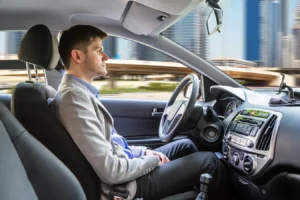
At the core of the 2026 mobility revolution is artificial intelligence. Autonomous driving technologies — once confined to pilot projects — are moving closer to everyday use. Major players like Waymo are expanding their robotaxi fleets with new vehicles tailored for public service, targeting millions of rides annually. Partnerships between technology firms and automakers — notably between Nvidia and established OEMs — are reigniting innovation after earlier slowdowns in full autonomy efforts. These collaborations focus on scalable AI-driven platforms that balance development costs with practical deployment, accepting that immediate full autonomy remains challenging while more limited forms (Level 2-3 driver-assist) are monetizable today.
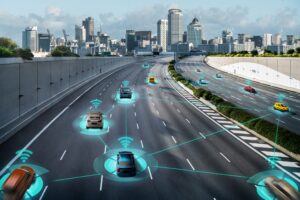
McKinsey’s perspective underscores that the shift to self-driving systems will reshape how cities operate — reducing congestion, enabling new vehicle form factors, and potentially rendering traditional driver’s licenses obsolete in the long run. But this evolution depends as much on infrastructure and trust as it does on algorithms.
Software-Defined Vehicles and Physical AI
Mobility in 2026 isn’t just about hardware — it’s about software writ large. The emergence of software-defined vehicles (SDVs) is redefining how cars are built and updated. Vehicles increasingly behave more like computers on wheels, with over-the-air updates, modular AI stacks, and connected architectures that improve performance over time. Reports from CES 2026 highlighted the arrival of Physical AI — AI that interacts with the physical world through sensing, perception, and real-time decision-making — essentially treating vehicles as robotic systems rather than mere conveyances.
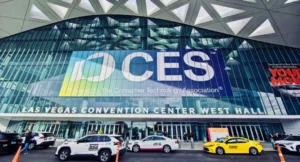
This convergence of automotive and robotics technologies hints at future vehicles capable of perceiving and acting with sophisticated spatial awareness. For consumers, this means enhanced safety, more intuitive interactions, and ultimately a shift from “driving a car” to “experiencing mobility.” Emerging micromobility concepts integrating AI — such as smart three-wheelers that serve as personal digital assistants — demonstrate how even smaller vehicles will embrace this trend.
Electrification and Sustainability
Electrification continues to be a defining feature of future mobility. Global EV adoption is expanding rapidly, driven by emissions regulations, cost parity with internal combustion engines, and growing consumer demand for cleaner transport. Heavy-duty applications — from electric trucks to urban shuttles — are also gaining momentum as cities and fleets shift toward zero-emission targets.
Battery innovation remains a strategic priority. Corporations like Hyundai are investing in advanced battery R&D campuses, aiming not only for higher energy density but also faster charging and reduced production costs. In parallel, concepts like Toyota’s compact, solar-augmented EVs signal how micromobility will complement larger battery electric vehicles (BEVs) in dense urban environments.
Connectivity: V2X, 6G, and Digital Infrastructure
Connectivity enhancements — from cellular vehicle-to-everything (C-V2X) systems to emerging 6G networks — are improving real-time coordination between vehicles, infrastructure, and pedestrians. This enables safer, more efficient traffic flow and deeper integration with smart city frameworks. Early trials in urban signal preemption and coordinated traffic management showcase the potential for connectivity to mitigate congestion and improve emergency response times.
Looking ahead, the integration of mobility services with digital platforms (often dubbed Mobility-as-a-Service or MaaS) will reduce reliance on privately owned vehicles and enable seamless multi-modal journeys. Super apps bundling ride-hailing, transit, parking, and payments are already gaining ground, pointing to a future where transportation ecosystems are as much digital as they are physical.
(check out this post on Elon Musk’s Singularity talk on Moonshot)
Consumer Trust, Regulation, and Adoption Barriers
Despite technological progress, trust remains a linchpin for adoption. Advanced driverless systems must not only be safe but also perceived as reliable by the public. According to recent industry analysis, the key determinant of broader acceptance will be societal trust — built through transparent performance, robust regulation, and clear communication about risk and benefit.
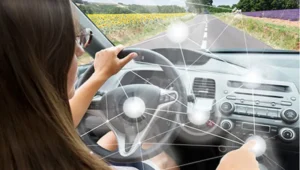
Regulators and city planners also play essential roles, incrementally enabling autonomy while ensuring safety and equity. Infrastructure upgrades — from dedicated lanes to sensor-equipped intersections — will determine how quickly mobility innovations scale beyond pilot zones.
Looking Forward: Mobility Reimagined
In 2026, the future of mobility is no longer a distant promise — it is unfolding in real time. AI-native vehicles, electrification at scale, connected infrastructure, and shifting consumer behaviours are redefining how people and goods move. While challenges remain — especially around trust, regulation, and equitable access — the direction is clear: mobility will become smarter, cleaner, more shared, and deeply integrated with the digital world.
Share on Linkedin: https://www.linkedin.com/company/ideacomms/
Checkout these recent articles:
Elon Musk’s January Moonshot: Singularity Is No Longer Science Fiction
Mary Meeker’s “Trends – Artificial Intelligence” (BOND 2025)
State of CVC 2025: Maturity, Mandate Shifts and the New Operating Reality
“Intelligent World 2035”: Ten Technology Trends – A Huawei Analytical Overview
AI in Motion: How Automation is Reshaping Southeast Asia’s Logistics Landscape
Subscribe to our Newsletter
Join our mailing list for exclusive updates and promotions!
