



Elon Musk’s January Moonshot: Singularity Is No Longer Science Fiction
1. From Exponential to Vertical: Why Singularity Is Near
Musk framed the current moment as a historic inflection point. AI development, he argued, is no longer progressing linearly or even exponentially—it is moving vertically. Once AI systems can recursively improve themselves, human intelligence will no longer be the ceiling.
In Musk’s view, this transition defines the singularity: a point where machine intelligence surpasses human cognition in most domains, fundamentally reshaping economics, governance, warfare, and identity itself.
2.AI Is Leaving the Screen and Entering the Physical World
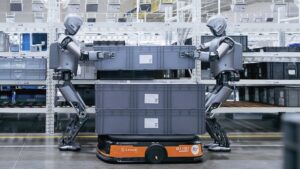
One of Musk’s strongest signals was that AI is no longer just software. Large language models were the opening act; the real disruption comes when AI gains agency in the physical world.
Robotics, autonomous vehicles, humanoid systems, drones, factories, and energy infrastructure are becoming AI-native. Intelligence is being embedded into matter. This shift, Musk warned, makes AI both more powerful and more dangerous—because mistakes are no longer virtual.
3.Intelligence Becomes a Commodity
Musk emphasized that intelligence—once scarce and expensive—is becoming abundant and cheap. When reasoning, creativity, coding, design, and decision-making can be replicated endlessly at near-zero cost, traditional economic assumptions collapse.
Jobs based on cognitive labor face the same disruption manufacturing faced during industrial automation. The challenge is not just employment, but meaning—what humans do in a world where machines outperform them intellectually.
4.China’s Acceleration: Running in Tight Circles
A notable portion of Musk’s analysis focused on China. While the US still leads in frontier AI models and chips, Musk highlighted China’s advantage in speed, scale, and integration.
China’s ecosystem allows rapid iteration: research moves quickly into hardware, hardware into manufacturing, manufacturing into deployment. This “tight circle” enables China to close gaps faster than many in the West expect.
Musk warned against underestimating China—not as an adversary narrative, but as a systems competitor with enormous momentum in AI-driven infrastructure, robotics, and energy.
5.Compute, Energy, and Data: The New Strategic Trifecta
According to Musk, future power will be determined by three inputs:
- Compute (chips and data centers)
- Energy (electricity generation and grid resilience)
- Data (real-world, high-quality, continuously refreshed)
AI progress is already bottlenecked by energy and compute. Nations and companies that solve these constraints will define the next global order.

6.Risk, Alignment, and the Fragile Margin of Error
Despite his optimism, Musk reiterated that AI risk is non-trivial. The danger is not evil intent, but misaligned objectives amplified by superhuman capability.
He argued that governance, alignment research, and international coordination must evolve as fast as the technology itself—something history suggests is difficult, but necessary.
7.Humanity’s Choice: Passenger or Pilot
The closing theme of Musk’s talk was philosophical. Humanity can either become a passenger species, living comfortably but passively under machine intelligence—or remain a pilot, actively shaping outcomes through foresight, ethics, and bold decision-making.
The next decade, Musk suggested, will quietly decide which path we take.
Share on Linkedin: https://www.linkedin.com/company/ideacomms/
Checkout these recent articles:
The Future of Mobility in 2026: Tech Trends and Strategic Drivers
Mary Meeker’s “Trends – Artificial Intelligence” (BOND 2025)
State of CVC 2025: Maturity, Mandate Shifts and the New Operating Reality
“Intelligent World 2035”: Ten Technology Trends – A Huawei Analytical Overview
Subscribe to our Newsletter
Join our mailing list for exclusive updates and promotions!
