



Arc’teryx’s Tibet Fireworks Outcry: What it Teaches Brands about ESG, Public Affairs and Reputation
When Arc’teryx collaborated with the celebrated artist Cai Guo-Qiang on a fireworks display across the Qinghai–Tibet plateau in September 2025, the brand had intended to dazzle. Instead, it found itself engulfed in the wrong kind of flames. The spectacle, titled Rising/Ascending Dragon, unfolded against the fragile Himalayan landscape near Shigatse. Within hours of its release online, the event was condemned as an ecological affront and a cultural misstep. The backlash was swift: videos were pulled, apologies issued, and local authorities signalled an investigation into potential damage to the plateau’s ecosystem.
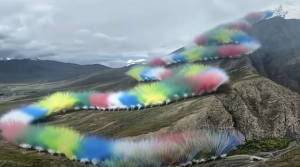
What followed was a textbook case in reputational crisis. International and Chinese media framed the event as an avoidable blunder. Business of Fashion chronicled calls for boycotts; Sixth Tone concluded the campaign had “backfired”; the South China Morning Post quoted Arc’teryx admitting the incident had been a “wake-up call” to respect nature; and Global Times distilled public fury in a single line: “Many netizens criticized the event as absurd, questioning the decision to set off explosions in such an ecologically fragile region.”
ESG 101—And Why It Matters to Brand Commerce
ESG—environmental, social and governance—has moved far beyond the language of investor reports. Once a screening mechanism for capital markets, it is now the architecture of corporate trust. The “E” forces scrutiny of climate footprints, biodiversity and resources. The “S” demands accountability in community relations, labour standards and cultural sensitivity. The “G” insists on transparency and governance structures that embed responsibility into decision-making.
Channel NewsAsia recently captured this evolution well. “It’s crucial to build metrics to see the progress of companies on their climate commitments,” observed Peter Bakker, president of the World Business Council for Sustainable Development. The point is that ESG is measurable, not rhetorical. In brand commerce, it governs sourcing and production but also the less obvious question of where a marketing campaign takes place. A fireworks show in a pristine plateau is no longer just a creative flourish—it is a test of ESG credibility. Regulators are expanding their reach on misleading environmental claims, as The Guardian has reported in its coverage of greenwashing crackdowns, while investors increasingly price public sentiment into brand valuations.
Crisis Management Framework: Acknowledge, Apologise, Act
Arc’teryx’s misjudgment also illustrates the enduring three-step framework of crisis management. First, acknowledge—recognition must be swift and unambiguous. Silence breeds suspicion. The brand’s removal of the videos and confirmation of an inquiry signalled it understood the gravity of the moment. Second, apologise—credibility lies in the willingness to shoulder responsibility without equivocation. By promising to be “more respectful of nature,” Arc’teryx gestured towards humility, though many observers found the words insufficient. Third, act—contrition without remedy is hollow. Commissioning independent environmental assessments and revising internal approvals represent the kind of steps that begin to restore faith.
As crisis specialists often note, the alchemy of crisis management lies in converting anger into renewed trust. Brands that codify these steps into a playbook are not immune from error but are significantly better placed to weather it.

Crisis Recovery: From Backlash to Advocacy
Recovery does not mean returning to business as usual; it means repositioning the brand on firmer ground. Transparency is critical: publishing the results of ecological assessments, however uncomfortable, signals respect for stakeholders. Learning must be visible too, with tangible shifts such as the creation of an internal “ESG Gatekeeper” review for campaigns in sensitive geographies. Community engagement transforms critics into collaborators when local voices are embedded in future decisions. And advocacy can turn a misstep into a platform, as when a company begins sponsoring conservation initiatives in the very environment it once harmed.
This is how a reputational wound can heal into credibility. The most resilient brands are those that respond not defensively but constructively, proving that they listened, learned and acted. In that shift lies the possibility of turning anger into advocacy.
Reputation: The Hardest Asset to Earn, the Easiest to Burn
Warren Buffett’s oft-cited maxim—“It takes 20 years to build a reputation and five minutes to ruin it”—is more relevant than ever in the era of social media. Five minutes can become five seconds when images of ecological insensitivity spread globally. For an outdoor brand, the disconnect is particularly stark. The values Arc’teryx sells—nature, respect, endurance—were precisely those undermined by the event.
As Explorers Web pointed out, even the company’s assurances that eco-friendly materials were used and residues would be removed did little to quell criticism. The very staging of the spectacle in such a landscape appeared irreconcilable with the brand’s professed ethos.
The Governance Lens (the “G” that Decides the Rest)
The incident also exposes the governance deficit. Who owns the brand-risk veto? Are ESG and public affairs advisers consulted upstream, before a campaign is greenlit? The South China Morning Post noted Arc’teryx’s place within Amer Sports, majority-owned by an Anta-led consortium, reminding us that investor priorities cascade into brand decisions.
Governance is where noble principles either live or die. Without clear escalation processes, even conscientious teams drift into misalignment. Regulators are ensuring that such drift has consequences. The European case of DWS, penalised over misleading ESG claims, illustrates how lapses can translate into fines, resignations and headlines that refuse to fade.
Voices That Matter: How Media and Thought Leaders Frame It
Different voices encapsulate the lesson. Global Times highlighted the domestic perception of absurdity in staging fireworks on a plateau. The Guardian cited designer Amy Powney’s warning that “greenwashing is rife,” a reminder that only transparency counts. CNA emphasised Peter Bakker’s call for measurable commitments, not platitudes. Collectively, these perspectives converge on a single truth: ESG is not a communications garnish but a reputational foundation.

Why Chief Brand & Communications Officers Must Put ESG First
Today’s brand and communications chiefs are not simply narrators of campaigns—they are guardians of legitimacy. ESG must be front of mind for three reasons. First, material risk is reputational risk. Studies now show that ESG controversies depress sales, impair recruitment and erode investor confidence. Second, regulators are alert. From advertising standards to securities regulators, misleading claims can lead not only to fines but also to personal accountability. Third, stakeholders demand coherence. Customers, employees and communities do not only ask what brands say; they scrutinise where and how they show up.
The Tibet fireworks saga will eventually fade from trending lists. But the damage to Arc’teryx’s credibility is a reminder that dazzling visuals never compensate for misplaced judgement. Reputation, once eroded, cannot be won back with a campaign—it requires years of discipline anchored in ESG.
How IDEA Communications Can Help
At IDEA Communications (www.idea-comms.com), we advise companies across Asia-Pacific on ESG integration, public affairs, crisis communication as well as other business issues. Our Crisis Communication Service equips brands to build rapid-response playbooks rooted in ESG principles, train leaders to acknowledge, apologise and act with credibility, and convert crises into advocacy moments through community engagement.
In a business climate where reputation is both fragile and foundational, foresight is not optional. Arc’teryx’s experience is a cautionary tale—but with the right ESG mindset and the right counsel, crises can be avoided, and when they come, they can be transformed into long-term resilience.
Subscribe to our Newsletter
Join our mailing list for exclusive updates and promotions!
