



AI in Motion: How Automation is Reshaping Southeast Asia’s Logistics Landscape
The global logistics sector, long characterised by tight margins, labour intensity, and complex supply chains, is entering an era of profound change. Artificial intelligence, robotics, and automation are redefining how goods move from factories to warehouses to consumers’ doorsteps. Nowhere is this more visible than in Southeast Asia, a region where rising e-commerce penetration, infrastructure gaps, and diverse regulatory regimes collide with the promise of efficiency gains through technology.
Rising Pressures on Southeast Asian Logistics
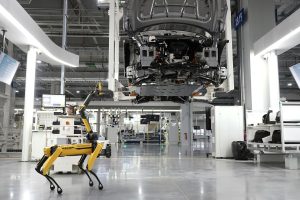
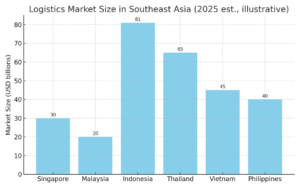
Southeast Asia’s logistics market is worth more than US$300 billion annually, driven by surging e-commerce volumes, regional trade, and manufacturing shifts as firms diversify beyond China. Yet inefficiencies remain. Cross-border customs can delay shipments by days; last-mile delivery costs eat into margins; and warehouse operations struggle with rising labour costs and space constraints.
For logistics providers, AI offers a double advantage: operational efficiency and scalability. From predictive demand modelling to warehouse automation, the ability to handle higher volumes at lower cost is increasingly a survival factor.
DHL: Pioneering Digitalisation in Warehousing
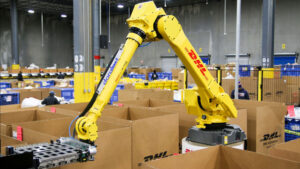
DHL, the German logistics giant, has invested heavily in digitalisation across Asia. In Singapore, it has rolled out AI-driven warehouse management systems that use predictive analytics to optimise inventory placement and routing. Globally, DHL operates more than 1,500 collaborative robots in warehouses, with Southeast Asia a focal point for expansion due to the region’s booming e-commerce market.
The company has deployed LocusBots and other robotic picking systems that reduce walking distances for human staff, improving productivity by as much as 80%. DHL is also experimenting with computer vision tools that enhance real-time tracking, ensuring faster turnaround at distribution hubs.
DSV: Optimisation and AI-Enhanced Freight
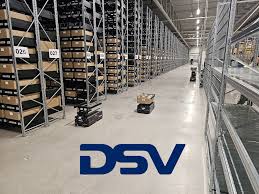
Denmark’s DSV, among the top global logistics players, has focused on integrating AI into its freight forwarding operations. Predictive algorithms analyse historical shipping data, fuel price movements, and geopolitical risks to recommend optimal routes and booking strategies. In Southeast Asia, where trade lanes stretch from manufacturing hubs in Vietnam to consumer markets in Indonesia and the Philippines, such optimisation is invaluable.
DSV has also invested in AI-powered visibility platforms that provide clients with granular data on shipment location, delays, and customs processing. For multinational manufacturers seeking resilience in their supply chains, this transparency is increasingly a non-negotiable feature.
Toll Group: Robotics at the Front Line
Australia’s Toll Group, with significant operations across Southeast Asia, has turned to automation to address labour shortages and rising costs. In Singapore and Malaysia, it has introduced automated guided vehicles (AGVs) and robotic sorting systems in its warehouses. These systems not only reduce reliance on manual labour but also enable 24/7 operations, crucial for markets where consumer demand peaks during late-night e-commerce sales.
Thomas Knudsen, Toll’s CEO, has repeatedly emphasised that technology is no longer optional but central to competitiveness: “Automation is not about replacing people; it is about scaling operations to meet demand and creating safer, more efficient workplaces.”

Syrius Robotics: Lazada’s Automation Partner
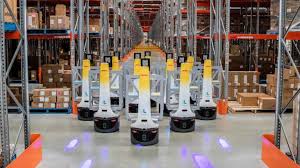
Perhaps the most striking illustration of AI’s role in Southeast Asia comes from Syrius Robotics, a Beijing-founded company that has gained traction with major e-commerce players. Syrius develops autonomous mobile robots (AMRs) designed for warehouses, capable of navigating complex layouts, picking items, and transporting them to human packers.
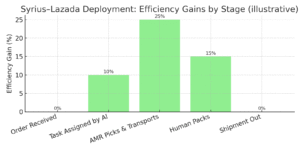
In 2024, Lazada — one of Southeast Asia’s largest online marketplaces — announced the deployment of Syrius robots in its regional warehouses. The move reflects a critical need: Lazada handles millions of orders daily, with surges during major shopping festivals like 11.11 or Ramadan. Syrius robots enable dynamic scaling, reducing order processing times and increasing throughput by double digits.
The robots are integrated with Lazada’s warehouse management system, powered by AI algorithms that dynamically assign tasks based on real-time demand. This human-robot collaboration model — where machines handle repetitive transport tasks and workers focus on higher-value functions like quality checks — is emerging as a blueprint for regional logistics.

Competitive Dynamics: Global Giants vs. Local Innovators
Southeast Asia’s logistics ecosystem is intensely competitive. Global heavyweights like DHL, DSV, and Toll compete against nimble local players, from J&T Express and Ninja Van to Gojek’s logistics arm. The differentiator increasingly lies not in fleet size but in technology adoption.
Local players have been quick to embrace AI for route optimisation, last-mile delivery scheduling, and cash-on-delivery risk assessment. Yet global firms, with deeper capital and R&D, are pushing robotics into core warehousing and cross-border operations. Syrius’ partnership with Lazada is a case in point: regional platforms are willing to experiment with cutting-edge robotics when volumes demand it.
Challenges: Labour, Regulation and Costs
Despite progress, hurdles remain. Labour remains a sensitive issue: unions and policymakers in Southeast Asia are cautious about automation displacing jobs. Regulators are also grappling with safety standards for robots and drones, particularly in densely populated urban areas.
Cost is another constraint. While AMRs and AI systems promise efficiency, upfront investment can be prohibitive for small and mid-tier logistics companies. Without financing support or shared platforms, adoption risks being concentrated among large multinationals.
Cybersecurity and data governance also loom large. As more logistics processes move onto AI-enabled cloud platforms, risks of cyber disruption or data leakage multiply. Regulators from Singapore’s IMDA to Malaysia’s MDEC are beginning to issue guidelines, but implementation varies.
The Road Ahead
The trajectory is nonetheless clear: AI will become embedded in every layer of logistics. Three themes will dominate:
- Warehouse robotics: AMRs and robotic arms will expand beyond pilot deployments into mainstream logistics hubs.
- Predictive visibility: AI-driven platforms will offer not just real-time but predictive supply-chain intelligence.
- Platform partnerships: E-commerce firms will deepen collaborations with robotics and AI providers, creating new standards for scalability.
For Southeast Asia, where logistics efficiency is pivotal to sustaining e-commerce and manufacturing growth, the race is no longer about who has the largest fleet. It is about who can harness AI most effectively to move goods faster, cheaper, and smarter.
Syrius’ work with Lazada may prove emblematic: a future where robots quietly orchestrate the region’s logistics engine, augmenting human work while transforming one of the most traditional industries into a digital frontier.
Subscribe to our Newsletter
Join our mailing list for exclusive updates and promotions!
